More than 10% less surface area with less than 5% additional energy consumption: a scientific publication in *Bioresource Technology Reports* shows how constructed wetlands can achieve higher treatment performance through targeted aeration and granular activated carbon. Under realistic operating conditions using domestic wastewater, the constructed wetland containing activated carbon achieved the highest treatment performance while maintaining low land and energy requirements. The study was conducted in collaboration between Dr. Yamini Mittal and Janisch & Schulz.
An article recently published presents constructed wetlands in a generally positive light, but contains some shortened or potentially misleading statements.
It is correct that planted soil filters require space. However, it is misleading to imply that they can only treat “limited” volumes of water – every wastewater treatment plant is hydraulically designed for a defined capacity.
Properly designed systems do not produce odors. Fluctuating inflows are a challenge for all biological treatment processes – constructed wetlands are considered robust in this respect.
Constructed wetlands are not a development solution, but a standards-compliant, professional wastewater technology – successfully implemented for over 30 years.
A current research project is investigating the potential of electroactive constructed wetlands as an advancement of conventional planted soil filters.
Based on a one-year pilot system operated under real wastewater conditions, a significantly higher removal performance for organic matter and nutrients was demonstrated.
Through the targeted use of conductive elements, material consumption and land requirements were substantially reduced.
The results show that electroactive constructed wetlands are technically robust and economically viable for practical application.
Since 2023, four nature kindergardens built by LivingCircles GmbH have been equipped with their own treatment plants, even though they are located right in the city.
The educational concept of the institution is based on actively involving children in natural cycles and fostering a conscious use of resources. The aim is for children to experience how their own actions directly influence their environment. In line with this guiding principle, LivingCircles decided to integrate decentralized constructed wetlands into the local water cycle.
The BW Green Building in Bietigheim-Bissingen redefines sustainable architecture with an innovative Constructed Wetland (CW) by J&S Engineers. The CW naturally treats greywater, and the purified water, combined with harvested rainwater from cisterns, is used to irrigate roof and facade greenery. This approach minimizes wastewater, utilizes excess nutrients for plant fertilization, and cools the building through evaporation, enhancing the urban microclimate. Designed as an attractive green terrace, the CW demonstrates how biological water treatment can be efficiently and visibly integrated into modern architecture.
At the 2025 GWP Annual Conference in Berlin, J&S Engineers, represented by André Schäller, showcased sustainable solutions with Constructed Wetlands (CW). These provide decentralized, cost-effective wastewater treatment, enhance urban microclimates, and promote biodiversity. In developing countries, they create economic opportunities, notably in Mexico with projects involving sludge humification and ecological ponds.
As a sponsor of the 2025 Pan-American Conference in Paraguay, J&S Engineers promoted knowledge exchange on Constructed Wetlands (CW). Jörg Janisch highlighted their cost-effective, low-maintenance benefits for developing countries. The event featured lectures, workshops, and excursions to advance sustainable water technologies.
The J&S Wetland Roofs system represents a significant advancement in the purification of wastewater on green roofs, simultaneously offering passive cooling effects in buildings.
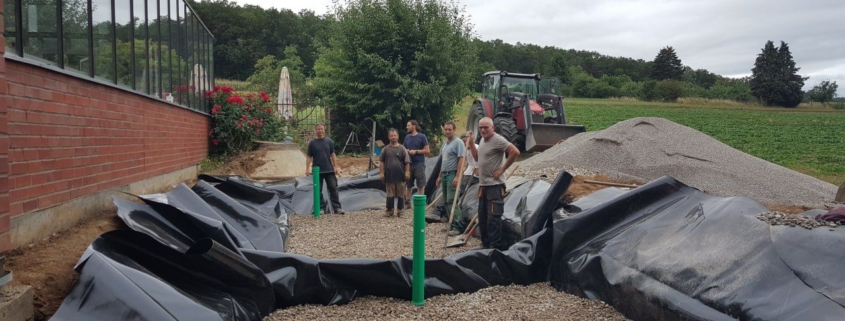
Our team has completed the installation of a new hybrid Constructed Wetland (CW) in a rose nursery in Steinfurth, Germany. This project, finished in June 2023, represents a significant advancement in CW innovation, achieving superior treatment efficiency with a nearly 40% reduction in space requirements!
… our colleague Yamini Mittal, congratulations!
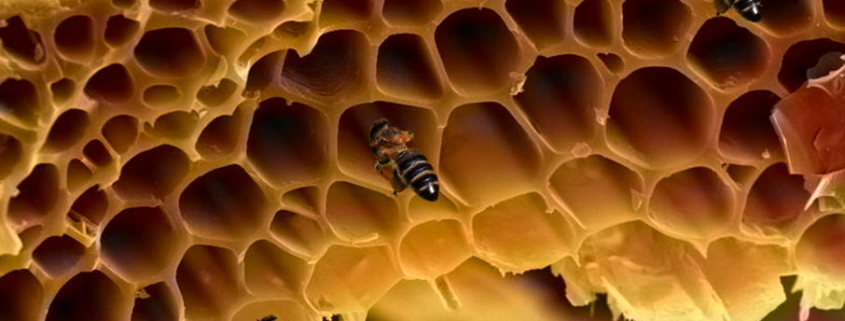
Her image “Bee Eco-Friendly” was selected as the most original idea among 180 competitors!
Your submission features an electron micrograph of a honeycomb-like, three-dimensional structure showing a small section of a Canna Indica plant processed into biochar…

Ingenieurgesellschaft
Bahnhofstraße 15
35516 Münzenberg-Gambach
Tel.: +49 (0)6033 74529-0
Fax: +49 (0)6033 74529-11
E-Mail: mail@janisch-schulz.com


Bw Green Building