Wetlands: Only a solution for farmers and developing countries? – Not at all.

A recently published article titled “How wastewater can be treated naturally” initially paints a positive picture of constructed wetlands. At the same time, however, the article contains several formulations that subtly convey a narrative: constructed wetlands appear to be a sensible solution for developing countries or small rural applications – but not a professional wastewater solution in Germany.
As planners and operators of planted soil filters with more than 30 years of experience, we would like to technically classify and clarify several points.
1. Land Requirement and “Limited Volume”
“The basins required for this take up a lot of space and can only treat a limited volume of water.”
It is technically correct that planted soil filters require more surface area than highly compact technical systems. However, the second part of the sentence suggests a specific deficiency.
Every wastewater treatment technology – whether activated sludge, SBR, or membrane processes – is hydraulically and biologically limited. Every plant can only treat a defined amount of water per day. Design is always based on population equivalents, pollutant loads, and hydraulic peak flows.
Planted soil filters are not “small” systems – they are surface-optimized, load-dependent reactors with clearly defined performance capacities. In Germany, they are designed in accordance with standards and meet the same effluent requirements as conventional processes.
2. Odor Development
“However, the odor is occasionally unusual.”
Properly designed and operated vertical flow constructed wetlands do not produce odors.
Odor problems arise in anaerobic, overloaded, or incorrectly dimensioned systems – regardless of the treatment process. In aerated vertical soil filters, predominantly aerobic conditions prevail. Reference plants can be visited at any time; they are not perceptible in terms of smell.
The general wording in the article does not reflect the technical reality of modern systems.
3. Role of the Plants
“The plants mainly ensure that the purifying biofilm can form.”
It is correct that the actual treatment performance is provided by microorganisms.
Plants support the system, but they are not the primary cause of pollutant removal. An unplanted soil filter can achieve nearly comparable treatment performance. The key functions of vegetation are:
-
Long-term stabilization of hydraulic permeability
-
Root structuring of the filter body
-
Limited oxygen input
-
Prevention of clogging over decades
Constructed wetlands are microbiological reactors supported by vegetation – not “plant cleaning basins.”
4. Fluctuating Water Volumes
“Fluctuating water volumes are difficult.”
Hydraulic fluctuations are a challenge for every treatment system.
However, planted soil filters have a high buffer capacity within their pore space and respond comparatively robustly to load variations. Especially in decentralized applications with discontinuous inflow, they prove to be operationally reliable.
The statement in the article is therefore not incorrect, but unspecific – it applies equally to all biological treatment processes.
5. Use of Biodegradable Cleaning Agents
“In addition, people should only use biodegradable personal care and cleaning products if the water is to be treated in a constructed wetland.”
This statement is technically not sustainable.
Constructed wetlands in Germany are designed to treat domestic wastewater – including common household chemicals. In several of our facilities, wastewater from animal shelters is treated, where disinfectants are regularly used.
Such systems still comply with the officially required effluent standards.
Of course, responsible handling of chemicals is generally advisable – but not specifically for constructed wetlands; it applies to every form of biological wastewater treatment.
Constructed Wetlands Are Not a “Development Aid Technology”
The portrayal in the n-tv article subtly suggests that constructed wetlands are primarily suitable in regions without technical infrastructure.
In fact, planted soil filters in Germany are:
-
Regulated by standards
-
Proven for decades
-
Implemented at large scale
-
Economically competitive
-
Energy efficient
-
Operationally reliable
They are not a provisional solution, but a mature form of nature-based wastewater technology.
Conclusion
The article contributes to public awareness of nature-based systems – which is fundamentally positive. However, some formulations oversimplify technical relationships or imply value judgments.
Constructed wetlands are not a romantic alternative, but professional, scientifically grounded, and standards-compliant wastewater treatment plants.
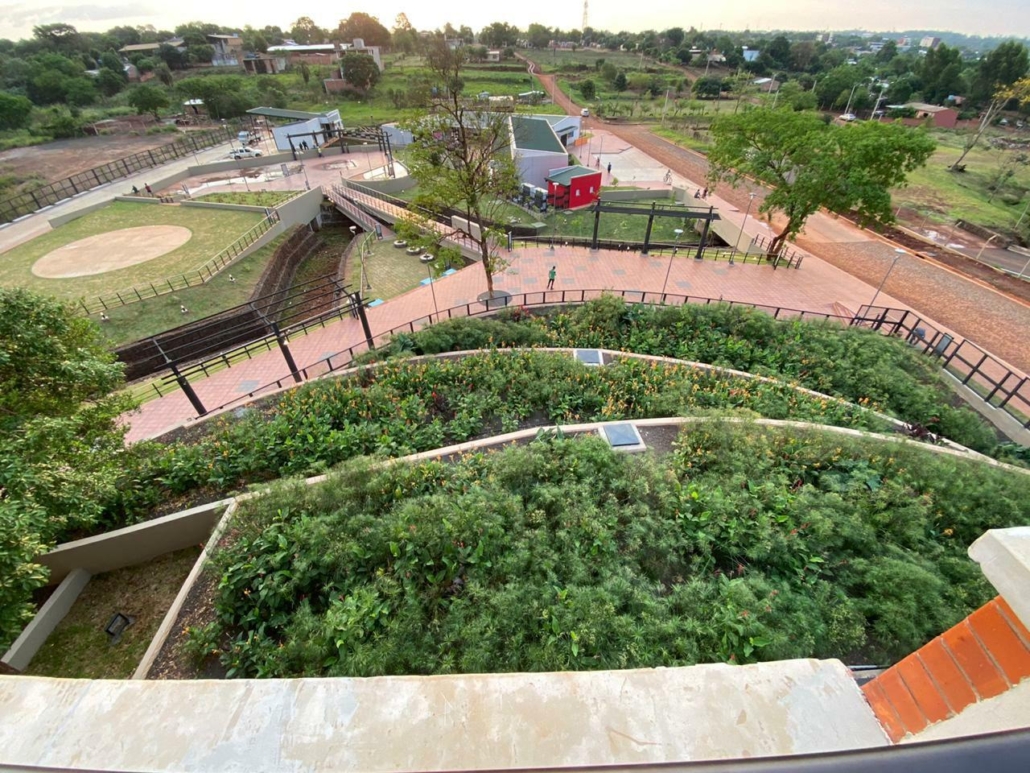
As an engineering office with more than 30 years of experience, we stand for a fact-based discussion grounded in technical expertise. Below are some photos of our projects (with link) that underline our statements.