Taking Constructed Wetlands Further: Activated Carbon and Targeted Aeration Put to the Test
More than 10% less surface area with less than 5% additional energy consumption: a scientific publication shows how constructed wetlands can achieve higher performance through targeted aeration and activated carbon.

new article: “Enhanced design and performance of GAC-amended biofilters with intermittent aeration for domestic wastewater treatment under real conditions.”
Research with Direct Practical Relevance
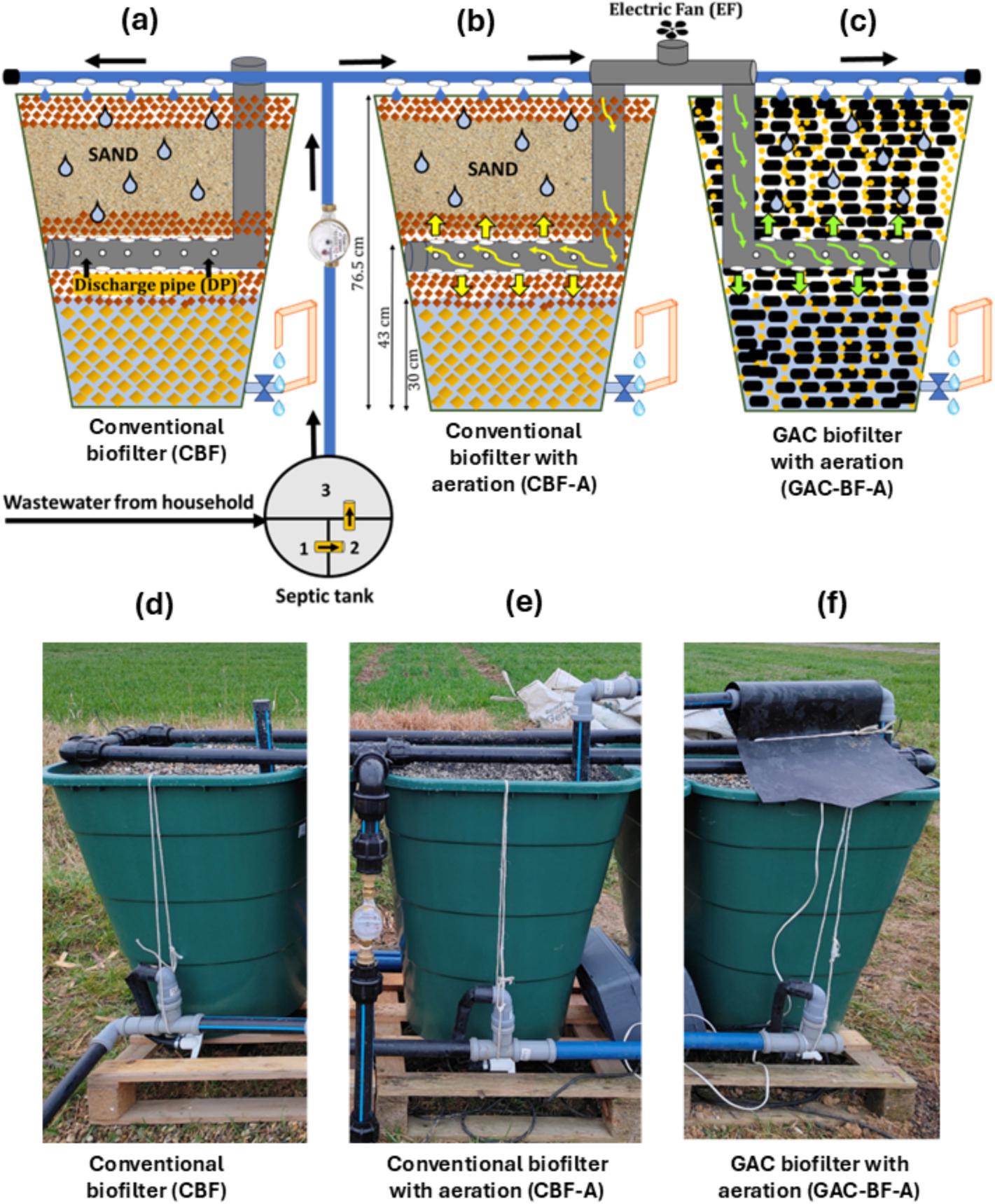
A publication in Bioresource Technology Reports compares three different configurations under realistic operating conditions using domestic wastewater: a conventional constructed wetland (CW) without aeration, a conventional CW with intermittent aeration, and a CW containing granular activated carbon combined with intermittent aeration.
The scientific study was carried out in close collaboration between Dr. Yamini Mittal and members of the Janisch & Schulz mbH engineering team. Janisch & Schulz was not only involved as an industry partner but actively contributed to the research process, from providing the experimental setting and collecting and analysing data to interpreting the results from an engineering perspective.
Many studies on wastewater treatment are conducted under controlled laboratory conditions. For the design of decentralised treatment systems, however, it is essential to understand how these systems perform under real operating conditions. The constructed wetlands were therefore fed with real domestic wastewater from a primary treatment stage and investigated under conditions closely reflecting practical operation.
The study combines scientific methodology with many years of experience in the design, construction and operation of decentralised constructed wetlands. The aim was to generate reliable findings for robust, space-efficient and operationally reliable treatment systems.
Aeration was not applied continuously but specifically after each feeding event. This supplied oxygen precisely during the phases of particularly high microbial activity. In this way, treatment performance can be improved without making the system unnecessarily energy-intensive.
In the best-performing system, part of the sand was replaced with granular activated carbon. Activated carbon can adsorb pollutants while its porous structure provides a large surface area for microorganisms to colonise. These biofilms break down organic matter, support the transformation of nitrogen compounds and contribute to stabilising water quality.
High Treatment Performance with Minimal Additional Input
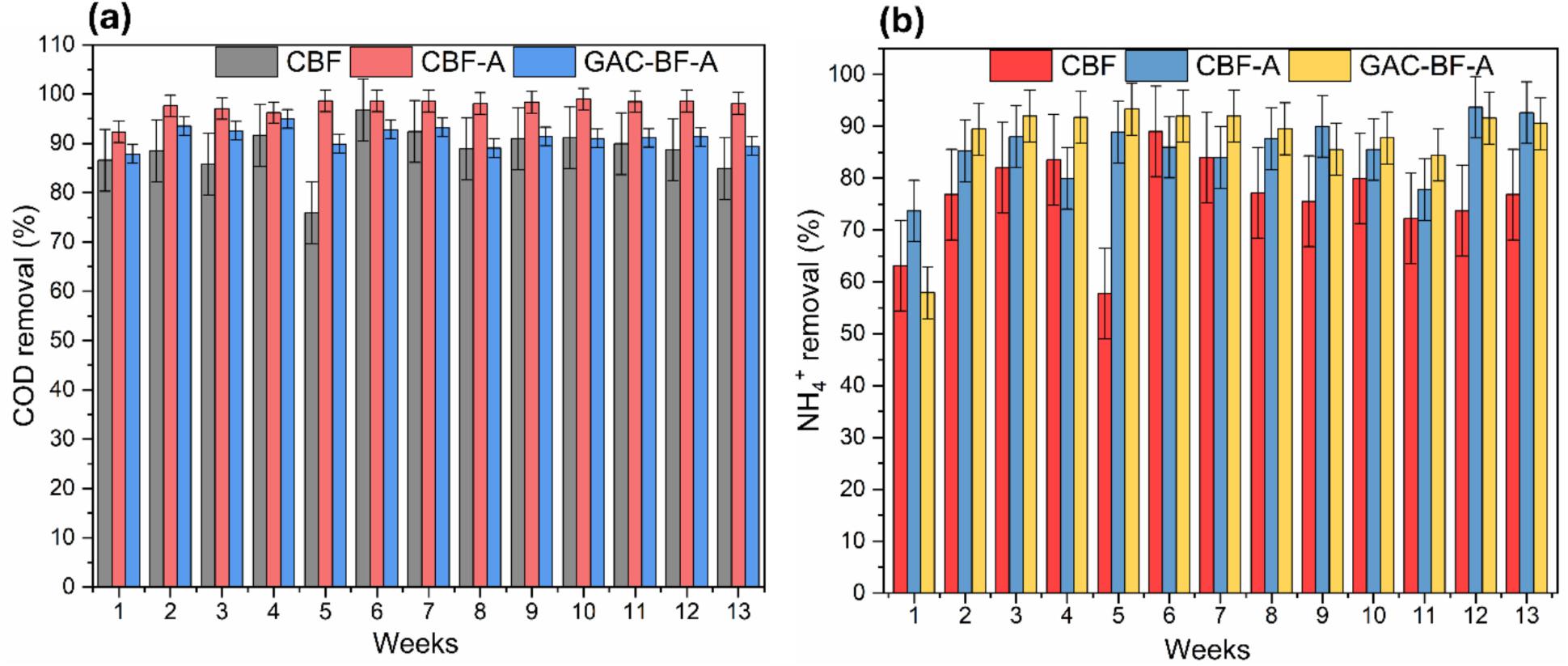
The constructed wetland containing activated carbon and intermittent aeration achieved the highest removal of organic pollution. Average chemical oxygen demand (COD) removal reached approximately 98%. Phosphate removal was also highest in this system.
For ammonium, the positive effect of aeration was particularly evident. The aerated systems performed significantly better than the non-aerated reference system. Continuous intensive aeration was not required. Instead, the time-limited supply of oxygen improved treatment performance while requiring only a small amount of additional energy.
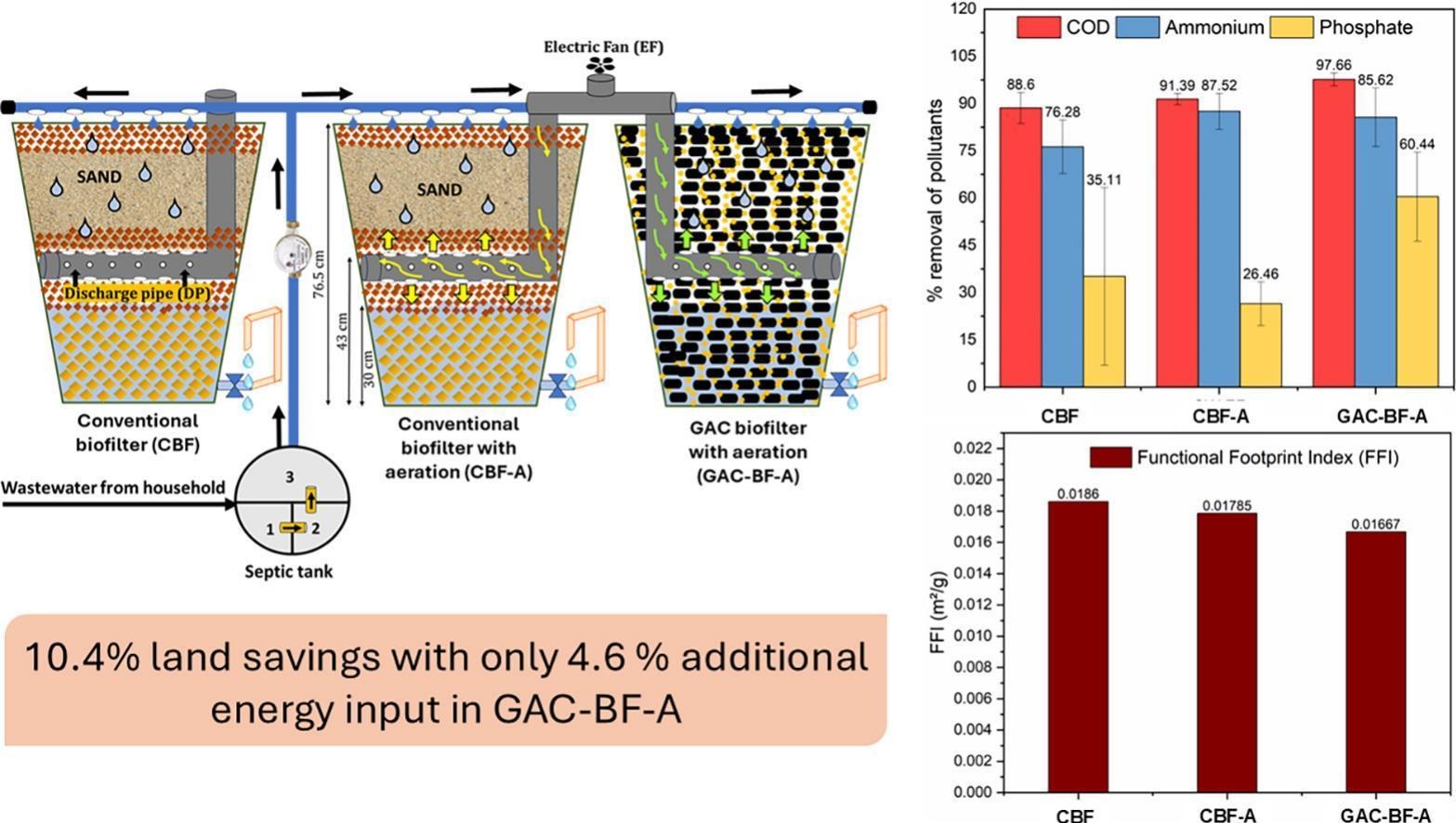
graphical abstract of the results
Significance for Constructed Wetlands
Constructed wetlands and planted soil filters are recognised as robust and low-energy solutions for decentralised wastewater treatment. At the same time, requirements regarding land use, effluent quality and nutrient removal continue to increase.
The publication highlights a development pathway to which Janisch & Schulz actively contributed: nature-based treatment systems do not need to be replaced by increasingly complex technology. Instead, their performance can be selectively enhanced by supporting biological processes through simple technical measures and carefully selected filter materials.
Intermittent aeration and biofilm-friendly filter materials such as granular activated carbon can help enable the design of more compact and higher-performing treatment systems. This is particularly relevant where space is limited or where more stringent effluent quality requirements must be met.
Further long-term studies and larger-scale trials are still needed. Nevertheless, the results are promising: a constructed wetland combining granular activated carbon with energy-efficient aeration can effectively bring together high treatment performance, improved space efficiency and reliable operation.
For Janisch & Schulz, the study confirms our own approach: the future of decentralised wastewater treatment does not necessarily lie in adding more and more technology, but in intelligently designed, robust systems that make targeted use of biological processes.
Interested in our products and services? Contact us at mail@janisch-schulz.com.
Direct link to the publication:
https://www.sciencedirect.com/science/article/abs/pii/S2589014X2600321X